Bal Maidens and Tinnie Boys
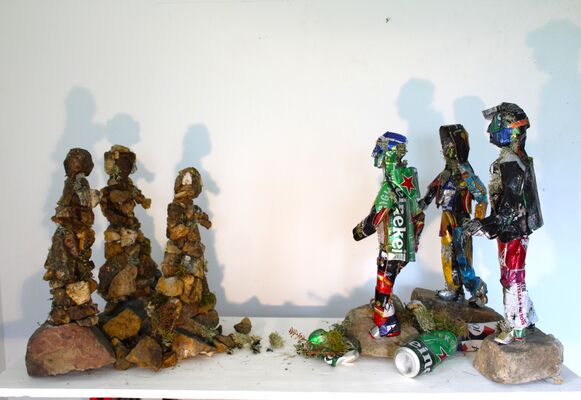
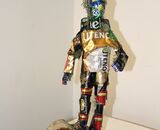
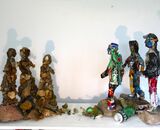
Encounter at the Engine House
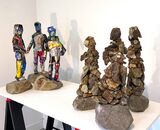
The bal maidens and the tinnie boys come face to face.
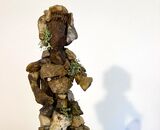
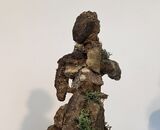
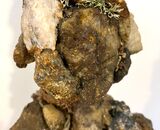
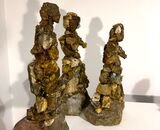
Media: Mine spoil, drinks cans, lichen and moss.
The Bal Maidens
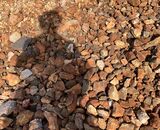
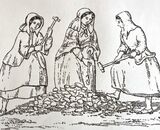
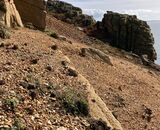
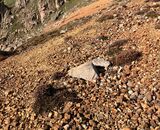
Bal maidens were women and girls who broke up stone brought from deep underground. It was part of the process of extracting tin and copper ore in the Cornish mining industry in the 18th and 19th Centuries. On a guided walk towards Trewavas engine house, led Steve Polglase a local mining history expert, we paused near the cliff edge beside what I thought were layers of scree; rubble loosely strewn at the cliff top, rolling towards the sea. Steve explained that this was stone from underground that had been smashed by bal maidens working for the mine, by-products of their work, still here after 150 years or more. I picked up a piece and thought about the woman who had touched it last or shovelled it aside. Holding the stone felt like making a connection with her across the years.
These figures are made from the stones.
The Tinnie Boys
There are many derelict engine houses, shafts and burras (overgrown mounds of mine spoil) in the area where I live. It’s not unusual to find drinks cans - aluminium ‘tinnies’ -scattered around them on the outskirts of towns and villages that used to be mining areas; the discarded end products from modern mining processes made from bauxite ore, most which is mined in Australia. I hope it’s not an unfair assumption that these were left by young men partying after hours. The Tinnie Boys are made from drinks cans that I collected from an engine house near Redruth, and the burras at the edge of my home village.